
Understanding the Bill of Lading (BOL) and Its Hidden Challenges in Tax Compliance

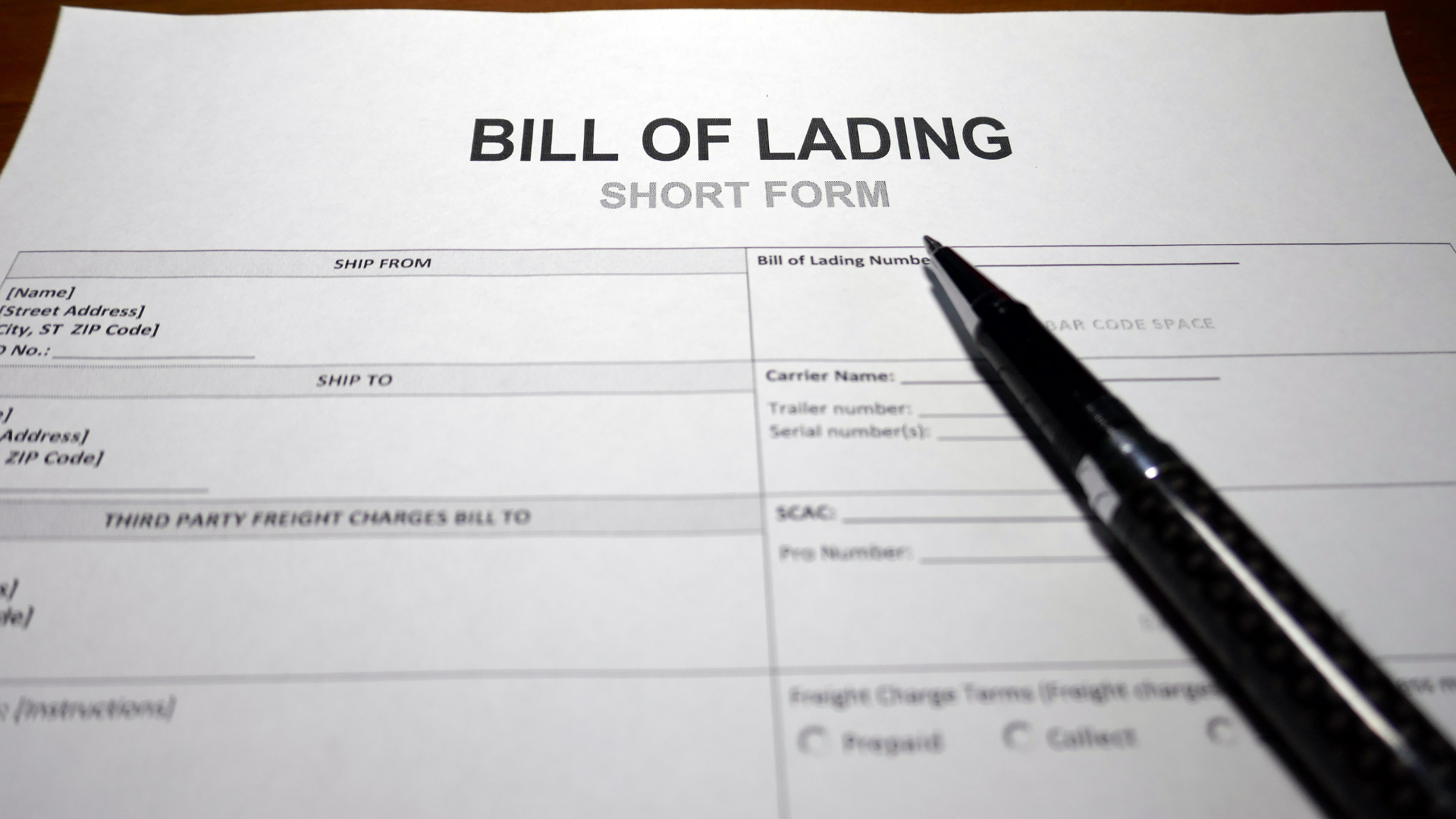
In excise tax, the Bill of Lading (BOL) does far more than record a shipment; it defines the entire tax liability tied to that movement. It is the source record for product movements across the supply chain, tracking goods from origin to delivery.
On the surface, a BOL appears to be a straightforward shipping document. In practice, a single error can cascade through your compliance process, affect downstream customers, and ultimately result in filing inaccuracies that expose you to audit risk.
During a recent IGEN and Weaver webinar on “Avoiding Costly Mistakes in Fuel Tax Reporting,” a few attendees mentioned that a main reason for their amendments was BOLs, specifically in the state of Illinois. For tax teams, understanding the BOL is not optional; it’s foundational.
What Is a Bill of Lading?
A Bill of Lading is a legally binding document issued by the terminal on behalf of the position holder/supplier. It details what is being moved, who is moving it, and where it’s going. In practice, it serves three core functions:
- Who the supplier is
- Who the purchaser is
- The product being picked up
- The destination of the product
While BOL formats vary by product type and jurisdiction, all versions contain key data elements needed for tax reporting. In fuel, this often includes federal dye legends, sulfur content, product codes, or specific gravity, details that carry real tax implications.
Other Key Information Found on a Bill of Lading
Although layouts differ, most BOLs include a consistent set of fields that directly influence tax return accuracy:
- Date and Time: When the product was pulled from the terminal
- Terminal Address: The physical origin point
- Buyer: Name and address of the purchasing entity
- Product: Fuel type or product classification
- Amount: Net and gross gallons
- Destination: Delivery location for the goods
- Carrier: Who is transporting the product
- Position Holder: Who owns the product at the rack
Because tax systems typically ingest BOL data to generate returns, any error in these fields later becomes a compliance issue.
How BOLs Complicate Tax Return Generation
Tax returns, federal and state, are built from the details on the BOL. When BOLs are incorrect, the resulting filings are incorrect. Simple as that. But what makes BOL accuracy so challenging?
1. Data Inconsistency Starts at the Terminal
Terminals receive data from pipelines, barges, rail, and upstream systems. Each source introduces different formats, codes, and attributes. If truck driver enters or maps this information incorrectly, whether that be a wrong product code, incorrect volumes, or a mismatched destination, the BOL reflects that error.
And once the BOL is wrong, every tax return using that BOL is wrong.
Tax authorities routinely cross-match BOL data with supplier returns and buyer filings. When numbers don’t align, the mismatch becomes an immediate audit trigger.
2. There’s No Standardized Education for BOL Interpretation
BOLs are essential to tax…but there is no real education about them.
There are no university courses, no standard certification, and no formal training pipeline for fuel tax documentation. Most tax professionals are expected to “figure it out,” often learning by troubleshooting mistakes after they’ve already reached an auditor’s desk.
This lack of education leads to:
- Misinterpretation of product codes
- Misunderstanding of ownership at the rack
- Incorrect mapping to tax schedules
- Gaps in cross-team communication
It’s a skill gap, one with real operational and financial consequences, especially in the age of the Silver Tsunami when key knowledge is retiring.
3. BOL Challenges are Difficult to Solve
BOLs vary by:
- Terminal
- Pipeline
- Barges
- Rail Car
- Transloaders
- Ship
Because of that variation, there is no universal BOL standard. No “magic button.” No system that transforms every BOL into a perfect tax record.
Instead, the strongest solution for tax departments is education and process discipline. When teams understand how BOLs are generated, what each field means, and how that field maps to taxable events, they can spot issues before they turn into audit liabilities.
4. Diversions Add Complexity to Tax Compliance
Diversions occur when a shipment’s destination changes after BOL is issued. While diversions are often necessary due to logistical or business needs, they introduce significant challenges for tax compliance.
When a diversion happens, the original BOL no longer reflects the actual movement of goods.
This creates discrepancies in key fields such as:
- Destination: The delivery location on the BOL becomes inaccurate.
- Tax Jurisdiction: A change in destination may shift the tax liability to a different state or region, requiring adjustments to tax schedules.
These discrepancies can lead to:
- Tax Filing Errors: Incorrect destination data results in misreported tax liabilities.
- Audit Triggers: Tax authorities may flag mismatches between the BOL and actual delivery records.
- Reconciliation Challenges: Teams must manually track and adjust diverted shipments, increasing the risk of human error.
For a deep dive into solving challenges related to diversions and flash titles, check out our blog: Flash Titles & Diversions: Essential Knowledge for Navigating Complex Fuel Reporting.
Mitigating Risk Through Better Training and Better Processes
Technology helps, but only when paired with deep knowledge from tax teams who understand the document feeding the system.
Correct System Setup Matters
Your compliance software must be configured accurately and consistently with the terminal or internal system feeding it. Proper configuration allows you to:
- Automate clean data intake
- Enforce data validation
- Flag missing or inconsistent fields
- Reduce manual entry errors
- Improve reconciliation speed
System setup is a frontline defense, but only if the users understand what “correct” looks like.
Build a Culture of Accuracy Around the BOL
Strong tax teams start with shared understanding. When everyone, from operators to analysts to managers, knows the importance of a BOL, accuracy improves and risk decreases.
Training should include:
- The full lifecycle of a BOL
- How terminal systems generate BOL data
- Common error patterns and how to identify them
- How BOL fields map to tax schedules
- The audit risks and penalties associated with incorrect BOLs
When your team understands the stakes, they don’t just process data, they protect the organization from financial and regulatory risk.
The Bill of Lading is not just a shipping document; it’s the backbone of fuel tax reporting. Its data dictates liability, impacts compliance accuracy, flash title liability and is the first thing regulators cross-check when something looks off.
There’s no single tool or template that eliminates BOL challenges. But there is a clear path to fewer errors, fewer audits, and more confident compliance:
Educate your team and strengthen your processes.
When your staff understands how BOL data flows into tax forms, and when your systems reinforce accuracy, you turn a historically high-risk document into a reliable foundation for compliance.
Find out how to steer clear of common mistakes in tax reporting.
This analysis is intended for informational purposes only and is not tax advice. For tax advice, consult your tax adviser. See the full disclaimer here.
